11 Best AI Music Video Generators for Artists in 2026
· 14 min read

Most artists searching for an AI music video generator actually need two different things: a lip-synced, beat-aware video for the full track, and a stack of vertical clips to post every week until the song catches. For the full-song job I reach for Freebeat or Neural Frames, and for the weekly vertical clips I use Cliptalk, because it turns a written idea into a finished 9:16 video with burned-in captions, B-roll and voiceover in one pass instead of forcing me to assemble five-second model outputs by hand.
I have put my own tracks through most of the tools below over the past year, and the pattern is consistent: the platforms that build a whole music video are slow and expensive per render, and the platforms that are fast and cheap do not understand your song at all. Knowing which camp a tool belongs to before you pay is most of the battle.
What "AI music video generator" actually means in 2026
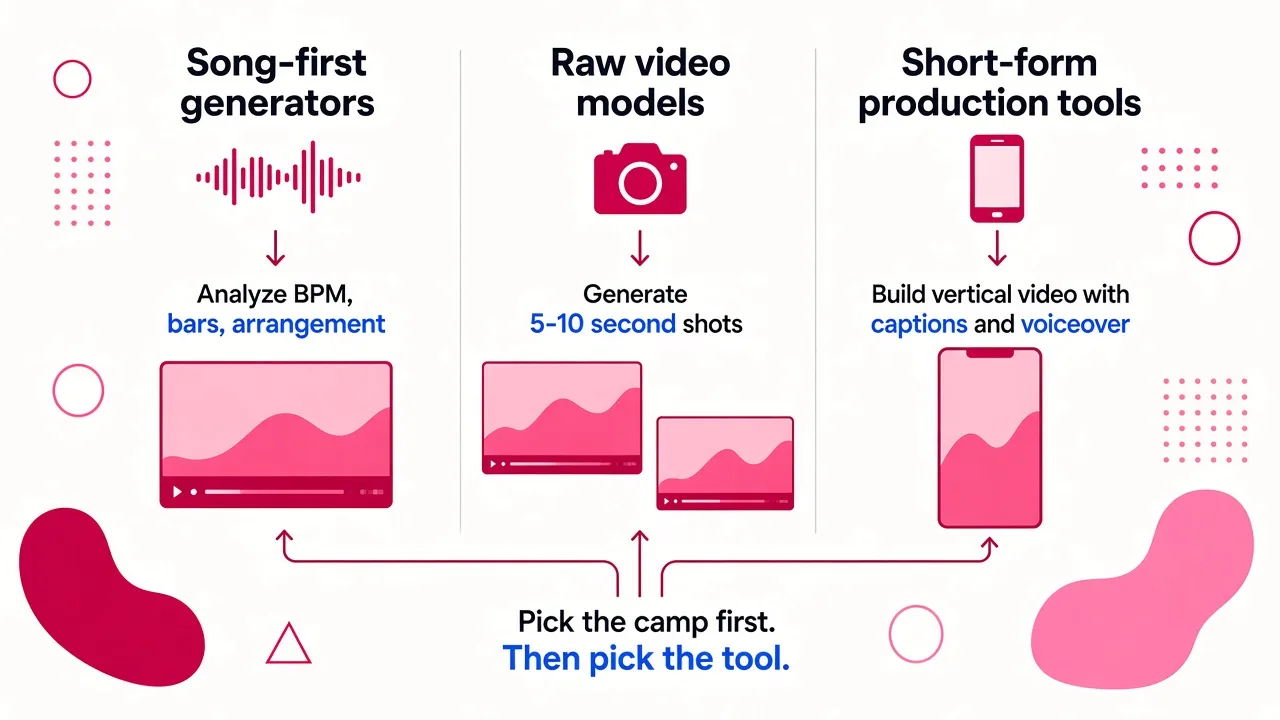
The category splits into three jobs, and almost every disappointed review I read comes from someone who bought a tool built for one job and expected another.
Song-first generators. You upload a WAV or paste a link, the platform analyzes BPM, bars and arrangement, then builds scenes that land on the chorus and the drop. Freebeat, Neural Frames and OneMoreShot sit here.
Raw video models. Runway, Kling, Veo, Firefly and Sora generate gorgeous five to ten second shots with no idea what your track is doing. You are the editor, and the assembly is your problem.
Short-form production tools. These build complete vertical videos with captions, voiceover and pacing for TikTok, Reels and Shorts. They are not going to render a lip-synced chorus, but they will get you the twelve posts you need around a release.
Pick the camp first. Then pick the tool.
How I judged these
Everything below was scored on the same five things, because these are the five that decide whether a render ends up published or deleted:
- Audio awareness. Does it react to your track, or just play visuals over it?
- Character consistency. Does the singer's face survive the cut, or morph between shots?
- Cost per finished video, not sticker price. A $12 plan that buys 25 seconds of usable footage a month is not a $12 plan.
- Vertical output without a re-crop. Native 1080x1920, with key content inside the safe zone. TikTok's interface eats roughly the top 130px, the bottom 350px and the right 64px, so anything centered for a 16:9 frame gets covered.
- Export readiness. 4K, aspect ratio variants, Spotify Canvas loops, watermark policy.
One more thing worth knowing before you publish: TikTok reads C2PA metadata and labels AI content automatically whether or not you disclose it. Plan for the label rather than trying to dodge it.
Quick comparison
| Tool | Best for | Full-song aware | Singing lip-sync | Free option | From |
|---|---|---|---|---|---|
| Cliptalk | Vertical promo clips around a release | No | No | Yes, free to try | See pricing page |
| Freebeat | Complete music-to-video production | Yes | Yes, 90%+ | Limited | Paid tiers |
| Neural Frames | Audio-reactive visuals with scene control | Yes | Yes | Plan free, 20s trial | $39/mo |
| HeyGen | One performer across a whole 4K video | Yes | Yes, phoneme level | Yes | $29/mo |
| OneMoreShot AI | Hands-off song to finished video | Yes | Yes | Plan free | $6.99 packs |
| Kling AI 3.0 | Photorealistic performance shots | No | Partial | Daily credits | ~$10/mo |
| Runway Gen-4.5 | Directed hero shots and VFX | No | No | 125 one-time credits | $12/mo |
| Google Veo 3.1 | Longest, most obedient cinematic shots | No | No | No | $28.99/mo |
| Adobe Firefly | Cheap, commercially safe clips | No | No | Yes | $9.99/mo |
| Kaiber | Spotify Canvas loops and beat sync | Partial | No | Limited | $15/mo |
| ElevenLabs Flows | Maximum pipeline control | No | Depends on node | Limited | Usage based |
1. Cliptalk, best for the vertical clips that actually move streams
A music video gets you one upload. What builds a release is the twenty or thirty vertical posts around it: the story behind the lyric, the gear breakdown, the tour date announcement, the "songs that sound like this" list. That is where I spend most of my production hours, and it is the job this tool was built for.
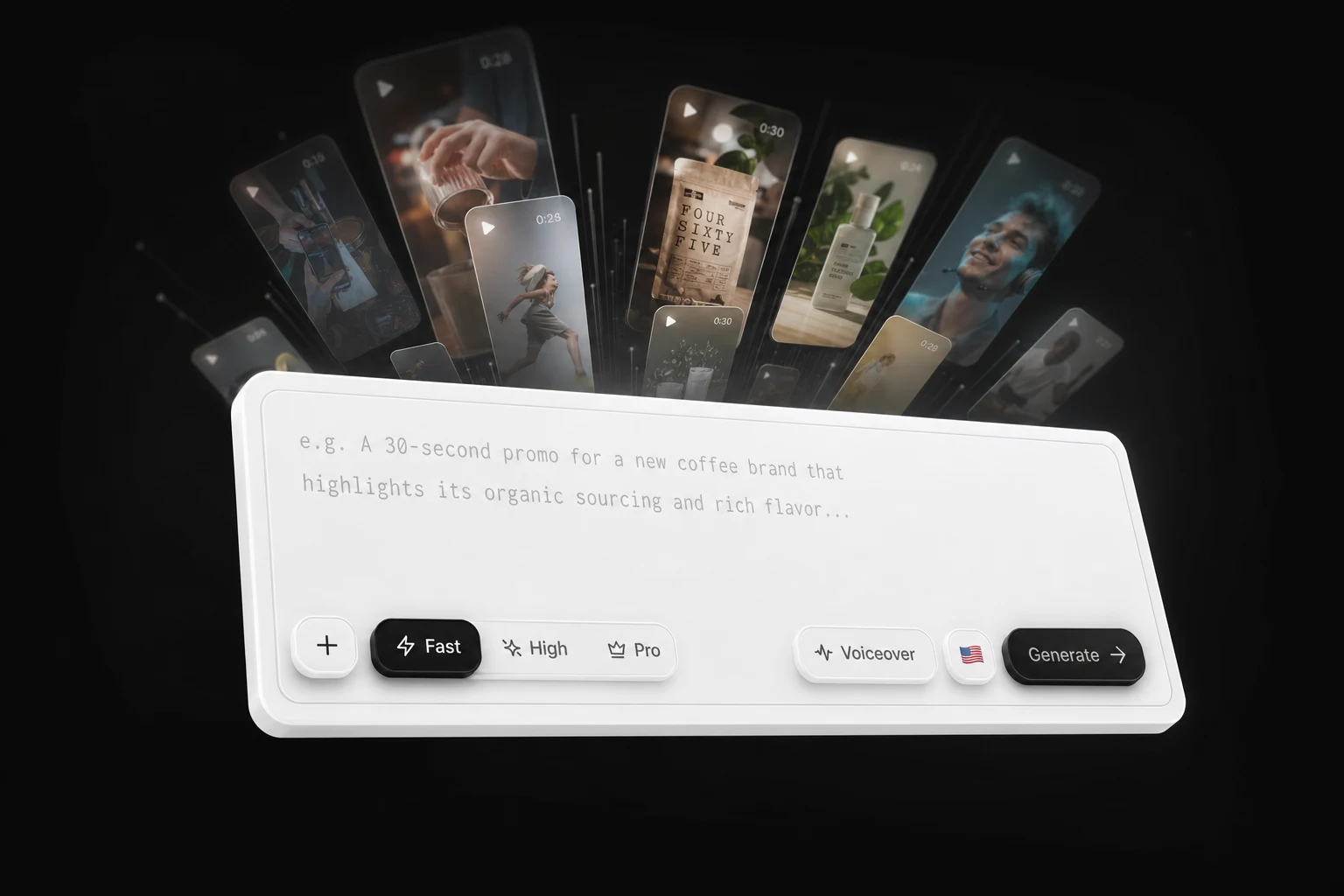
You give it a prompt, a script or an article, and it returns a finished short-form video with auto-captions, AI B-roll, an AI voiceover and, if you want a face on screen, an AI character. Voice cloning means the narration can be yours without you recording every take at 1am. Output is native 9:16, so nothing needs re-cropping, and the built-in editor lets you fix a line or swap a clip without exporting to another app. Realistically I can get a week of posts out in an evening, which is the number that matters when you are promoting on your own.
Pros
- Text or script to finished vertical video in one pass, captions included
- AI B-roll, voiceover and characters in one subscription instead of four
- Voice cloning keeps the narration in your own voice across every clip
- Editor on top, so you are not stuck with the first render
- Free to try without booking a demo call
Cons
- No beat detection or audio-reactive rendering, so it will not cut to your drop automatically
- No singing lip-sync for a full track, that is a job for Freebeat or HeyGen
- Built for short-form, not for a four-minute cinematic narrative
Who it fits: independent artists and labels who need consistent, caption-first promo content every week and do not want to assemble five-second model clips by hand.
2. Freebeat, best overall for a complete music video
Freebeat is the only tool I have used that listens to the track before it generates anything. Upload a WAV or paste a Suno link and it maps BPM, bars and arrangement, so scene changes land where the chorus drops and the riff kicks back in after the breakdown. Its Stage Performance mode gives you a digital frontman who holds the same face across cuts and hits over 90% lip-sync accuracy at the phoneme level, not a vague mouth shape that roughly matches. Storytelling mode keeps up to two persistent characters across a narrative arc without morphing.
It also generates static release artwork and Spotify Canvas animations matched to the track's mood, which means cover, Canvas and video come out of one session.
Pros
- Genuine song analysis, not visuals laid over audio
- Best-in-class lip-sync and character persistence
- Album art and Canvas in the same workflow
Cons
- Less directorial control than a node-based or shot-by-shot system
- Its house look is recognizable once you have seen a few videos made with it
Who it fits: DIY musicians who want the whole release visual package handled in one place.
3. Neural Frames, best for audio-reactive visuals you still control
Neural Frames drives visuals from your stems, so the movement is literally tied to the audio rather than approximated. What sold me was the storyboard step: you approve scenes before the render burns credits, which on a four-minute song is the difference between one paid attempt and four. Autopilot can finish a full video in under ten minutes, and there is a lip-synced vocal option.
Pros
- True audio-reactive rendering from your own stems
- Storyboard approval before render, which kills wasted spend
- Free to plan, with a 20-second trial render
Cons
- $39/month is the highest entry price in this list
- The trippy, morphing aesthetic suits electronic and psych far better than acoustic
Who it fits: electronic, hip-hop and experimental artists who want a reactive video and are willing to steer it.
4. HeyGen, best for one performer across a full 4K video
HeyGen's angle is identity. You build a performer once, and the same face, outfit and identity holds in every shot, which fixes the single most common failure of generic tools where the singer changes between cuts and the piece falls apart. Lip movement is matched at the phoneme level and holds across the full song, and the same performance can be dubbed into 175+ languages for an international release. It renders the full length of a track in one pass using models like Seedance 2.0, then upscales to 4K, and exports wide, vertical, or looping for Spotify Canvas without stitching or a watermark.
Pros
- Full-length single-pass render, 4K, no stitching
- Strong character consistency and phoneme-level sync
- Vertical and Canvas exports from the same project
Cons
- Avatar DNA shows through, results can feel presented rather than filmed
- $29/month Creator tier goes fast on a long track
Who it fits: artists who need a performance-led video with a consistent frontperson and multi-language reach.
5. Kling AI 3.0, best value for photorealistic performance shots
When I need a believable human doing something specific, Kling is where I go. Human motion and lip-sync quality lead the field for the price, Narrative mode extends clips to 15 seconds, and 3.0 Audio-Visual generates native audio if you need diegetic sound in a non-performance shot. At roughly $0.084 per second on standard mode via the official API it is the cheapest cinematic B-roll in this roundup, and the ~$10/month tier is the best price-to-quality ratio I have found.
Pros
- Natural human motion at a genuinely low per-second cost
- 15-second clips give you shots long enough to cut with
- Daily login credits let you test before paying
Cons
- No understanding of your track, assembly is entirely on you
- Defaults skew realistic, so stylized looks take work
- Queues at peak times on free credits
Who it fits: artists cutting their own edit who want realistic performance and narrative shots cheaply.
6. Runway Gen-4.5, best for directed hero shots
Runway is the closest thing here to a camera department. The multi-motion brush, precise camera controls and custom model training give you a signature look nothing else reproduces, and there is a real editing suite wrapped around the generator. The catch is brutal math: the $12/month Standard plan buys roughly 25 seconds of Gen-4.5 per month, and clips run five to ten seconds. That is a hero shot budget, not a music video budget.
Pros
- The most directorial control of any raw model
- Custom model training for a consistent visual identity
- 125 one-time free credits to evaluate properly
Cons
- Steepest learning curve in the list
- Entry plan credits evaporate on a full video
- No audio, no music awareness
Who it fits: directors who want two or three signature shots and will cut the rest elsewhere.
7. Google Veo 3.1, best prompt adherence and longest clips
Veo has the strongest prompt adherence I have tested. Ask for a specific camera move and lighting condition and you get it, which cuts your retry count dramatically. It handles up to 120 seconds per generation, far beyond anything else here, and generates native audio (irrelevant for a music video, useful for teasers and behind-the-scenes). Access is $28.99/month through Google AI Pro, or as a selectable model inside Adobe Firefly for $9.99/month, which is the cheaper route if you are not using anything else in the Google stack.
Pros
- Best prompt adherence, so fewer wasted renders
- Long generations mean fewer seams in an edit
- Available at a lower price through Firefly
Cons
- Most expensive direct subscription in this list, with no free tier
- No music awareness or lip-sync for singing
Who it fits: artists with a precise visual brief who need shots that come back right the first time.
8. Adobe Firefly, best free and commercially safe starting point
Firefly generates 5 or 8 second clips from a text prompt with intuitive camera angle and lighting controls, plus an editor for trimming and combining. Its native model is trained on commercially licensed content, which makes the rights conversation simple if a label or sync agent ever asks. At $9.99/month it is the cheapest paid door in this roundup and, as noted above, it doubles as a route into Veo.
Pros
- Free tier that produces genuinely usable clips
- Clean commercial rights position
- Web and mobile, so you can generate on tour
Cons
- 5 to 8 second clips mean a lot of stitching for a full song
- No audio analysis, no lip-sync
Who it fits: artists on zero budget testing whether AI visuals suit their sound at all.
9. Kaiber, best for Spotify Canvas loops
Kaiber earned its reputation on stylized short-form, and that is still where it wins. Pick an aesthetic (anime, cyberpunk, illustrated), feed it a track, and you get a distinctive Canvas loop fast. Beat Sync and a timeline editor live in the same workspace from $15/month, so light assembly happens without leaving the tool.
Pros
- Distinctive visual styles that do not look like everyone else's renders
- Beat Sync plus timeline in one canvas
- Ideal length and format for Spotify Canvas
Cons
- Struggles once you need consistent characters or a narrative
- Best output is short, looping and abstract
Who it fits: artists who need Canvas loops and stylized clips rather than a performance video.
10. OneMoreShot AI, easiest song to finished video
This is the most hands-off option I have used. Upload the track, let it run, and you get a post-ready, beat-synced and lip-synced video from a single pass. You can plan the whole thing free before paying, and pricing starts at $6.99 token packs or $19.99/month plans, which makes it the cheapest complete-video route here.
Pros
- Genuinely one-click from song to finished video
- Free to plan, so you see the concept before spending
- Cheapest entry point for a full music video
Cons
- Little control once the render starts
- Less polish and less character persistence than Freebeat
Who it fits: artists who want a video today and do not intend to direct it.
11. ElevenLabs Flows, best for maximum pipeline control
Flows is a node-based creative system where an agent plans your scenes and wires up a pipeline across 35+ models. It is the most powerful setup in this list and the least forgiving: final assembly stays with you, and you need to understand what each node is doing. I use it when I want a specific model for performance shots and a different one for environments in the same video.
Pros
- Access to dozens of models in one pipeline
- Agent-planned scene structure saves setup time
- Reusable flows once you have built one that works
Cons
- Real learning curve, and you still edit the final cut yourself
- Not a music-aware system out of the box
Who it fits: technical artists and small studios building a repeatable house style.
How I actually put a release together
The mistake I made early on was trying to solve everything with one subscription. A workable stack looks like this:
- Hero video. One song-first tool (Freebeat, Neural Frames or HeyGen) for the full-length lip-synced piece. Budget one paid month, not a year.
- Signature shots. Two or three Runway or Kling generations for the moments that need to look directed, cut into the hero video.
- Canvas and loops. Kaiber or Firefly for the 8-second Spotify Canvas and any looping teaser.
- The weekly posts. A short-form production tool for everything else, which is most of the work. I cover the vertical side of this in more depth in our guide to the best AI video generator for TikTok and Shorts.
Three practical habits that saved me money. Write your prompts as shot descriptions, not moods: camera position, lens feel, lighting, subject action. Approve a storyboard wherever the tool offers one, because retries are the real cost. And design every frame for the vertical safe zone from the start, since key content needs to sit roughly within a 960x1386 area to avoid being buried under platform interface.
Frequently asked questions
Is there a free AI music video generator worth using? Firefly's free tier is the most generous for raw clips, Kling gives daily login credits, and Neural Frames and OneMoreShot let you plan free and pay only to render. For finished vertical videos, several short-form tools include free credits, and we keep an honest breakdown of the trade-offs on our tool comparison page.
Can these tools lip-sync to singing? Freebeat, HeyGen, Neural Frames and OneMoreShot can. Raw models like Runway, Veo and Firefly cannot sing your lyrics, and no amount of prompting fixes that.
Do I own the output commercially? Firefly's native model is trained on commercially licensed content, and most paid tiers across these platforms grant commercial rights. Check the terms of the specific plan you buy, especially where a tool passes your prompt through a third-party model.
What about Pika, CapCut and Sora? Pika (from $8/month) makes fast, fun social clips but is no longer competitive as a full music video tool, CapCut remains the best free editor for finishing and 1080p export, and Sora 2 is available through ChatGPT Plus at $20/month for narrative shots. All three are useful parts of a stack, none is a music video generator on its own.
Which one should I start with? If you have a finished track and no video at all, start with Freebeat or OneMoreShot. If you already have a video and no momentum, start with the short-form clips, because in 2026 that is what actually gets the song heard.
Tags: ai music video, music video generator, ai tools for musicians, short-form video, music marketing