YouTube Shorts Release Date and How It Rolled Out
· 12 min read
YouTube Shorts was first released on September 14, 2020, as an early beta in India. Some sources list September 15, likely because of time zone differences. It reached the United States as a beta in March 2021, launched globally in more than 100 countries on July 13, 2021, and dropped its beta label on February 20, 2022. So the answer depends on which "release" you mean. The first public version arrived in September 2020, and the worldwide launch came in July 2021.
That staggered rollout explains why you'll see different dates depending on where you look. Below is the full timeline, why each stage happened, and what the history means for anyone publishing Shorts today.
The four dates that matter
If you only need the key milestones, here they are in one place.
| Milestone | Date | What happened |
|---|---|---|
| Early experiments | 2019 | YouTube tested vertical videos up to 30 seconds in a dedicated homepage section, shown to a small group |
| India beta | September 14/15, 2020 | Shorts creation tools and feed opened to users in India |
| US beta | March 2021 | Shorts rolled out to the United States, still labeled beta |
| Global launch | July 13, 2021 | Shorts expanded to more than 100 countries |
| Beta ends | February 20, 2022 | Shorts became a full, non-beta feature |
Most people asking "when did YouTube Shorts come out" want the first or the fourth row. Writing about the product's origin? Use September 2020. Writing about when Shorts became available to most of the world? Use July 2021.
Before the launch: the 2019 experiments
YouTube didn't build Shorts overnight. In 2019 it started testing vertical videos up to 30 seconds long, placed in their own section on the YouTube homepage. Only a small number of users saw this early version.
The motive was openly competitive. TikTok was growing fast, and YouTube's catalog was built almost entirely on horizontal, long-form video. A vertical, swipeable format was a different product. YouTube needed to learn whether its audience would watch it and whether creators would make it.
These tests weren't called "Shorts" in any public-facing way, which is why most timelines skip them. They still matter, because they show YouTube was working on short vertical video before the event that sped everything up.
September 2020: the India beta
India banned TikTok on June 29, 2020. At the time, that was one of the largest short-form video audiences in the world, and it suddenly had nowhere to go.
YouTube moved quickly. Within about eleven weeks, it launched the Shorts beta in India in mid-September 2020. YouTube's own Shorts team later wrote about this as the moment it "first launched our Shorts creation tools," and described the goal as helping mobile-first creators grow audiences with short-form video.
The India beta focused on creation, not just viewing. Users got a camera built into the YouTube app with tools designed for quick, phone-shot clips:
- A multi-segment camera for stitching short clips together
- Music from YouTube's library to add over the video
- Speed controls to speed up or slow down footage
- Timers and countdowns for hands-free recording
The early results were strong enough to justify expansion. By early 2021, YouTube said the number of Indian channels using Shorts creation tools had more than tripled since December 2020. It also shared that Shorts were getting more than 3.5 billion daily views. That was the first engagement figure YouTube made public for the format.
March 2021: Shorts arrives in the United States
In March 2021, the Shorts beta reached the US. It brought the same creation toolkit India had, plus a new Shorts carousel on the YouTube homepage. Viewers could tap into a Short and scroll vertically from one video to the next, which was the TikTok-style behavior YouTube had been testing since 2019.
Early coverage described Shorts as clips of 15 seconds or less, and that's how the in-app camera worked at first. Creators could either record in the app or upload a vertical video from their camera roll to have it appear in the Shorts carousel.
YouTube was explicit about why it wanted Shorts in the US. It said a huge number of people still found the bar for creating on YouTube too high, and Shorts would let them make snappy videos "with nothing but their mobile phones." The aim was to lower the effort needed to start a channel.
One quiet change around this time had a bigger effect on creators than the US launch itself. YouTube started counting Shorts views like regular video views. Since the YouTube Partner Program required 4,000 valid public watch hours in the past 12 months, Shorts became another route toward monetization eligibility.
The Shorts Fund
In May 2021, YouTube announced the Shorts Fund, a $100 million pool distributed over 2021 and 2022 to reward top Shorts creators. It was YouTube's first direct cash incentive for the format. By October 2021, YouTube said it had expanded the fund into more than 30 additional countries.
July 2021: the global rollout
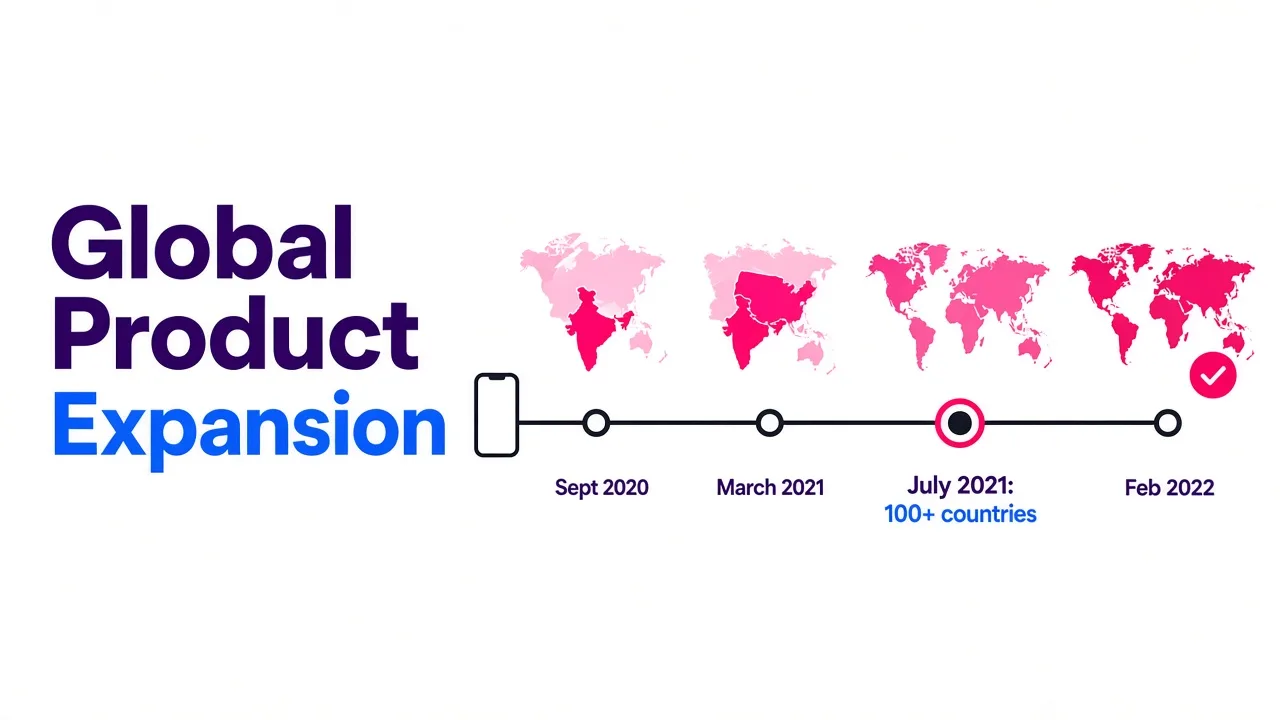
On July 13, 2021, Shorts expanded to more than 100 countries. This is the date many people mean when they say Shorts "launched," because it's when most of the world could create and watch them.
The global launch was still technically a beta. YouTube kept adding features and adjusting the format while the label stayed on. For creators, though, the distinction barely mattered. Shorts was in their app, in the homepage feed, and counting toward their channel.
YouTube's one-year review, published in October 2021, gave a sense of how fast adoption moved. From September 2020 to September 2021, the average number of daily first-time creators using Shorts tools more than doubled. The same post highlighted creators who grew rapidly on the format. One gained more than a million subscribers and 300 million views in a single month after starting to post Shorts.
February 2022: the end of the beta
Shorts officially exited beta on February 20, 2022. Nothing dramatic changed for users that day. It was mostly YouTube signaling that Shorts was now a permanent, core part of the platform rather than an experiment.
If you're citing the date Shorts became a "finished" product, this is the one to use. It's also the least commonly referenced, which is why many articles stop at July 2021.
After launch: how Shorts kept changing
The release date tells you when Shorts started. The format you're working with today looks quite different, because YouTube kept reshaping it. Here are the changes that matter most.
August 2022: Shorts on smart TVs
YouTube announced plans to bring Shorts to its smart TV app. A format built for phones started showing up on living room screens. That's a good reminder to keep important text and faces centered and readable rather than crammed into edges.
September 2023: YouTube Create
At the Made on YouTube event in New York on September 21, 2023, Google announced YouTube Create, a standalone video editing app aimed at helping Shorts creators. It launched on Android, and an iOS version followed in December 2025.
February 2024: 70 billion daily views
By February 2024, Shorts averaged 70 billion daily views, and the number of channels uploading Shorts was growing 50% year over year. Compare that to the 3.5 billion daily views YouTube reported in early 2021, and you can see how fast the format scaled in three years.
October 2024: three-minute Shorts
This is the biggest structural change since launch. YouTube announced in September 2024 that Shorts could run up to three minutes. The rule applies to videos uploaded on or after October 15, 2024: any square or vertical video up to three minutes long is classified as a Short.
A few details here trip people up:
- Older videos didn't convert. Vertical videos between one and three minutes uploaded before October 15, 2024 stayed as long-form videos and kept long-form monetization.
- Artist channels got a later date. For Official Artist Channels, the cutoff is December 8, 2025.
- Copyright claims hit harder on longer Shorts. Any Short over one minute with an active copyright claim of any type, including manual claims, is blocked globally. It won't play, get recommended, or earn money until the claim is resolved. Shorts under one minute keep the older rules.
- Music has its own limits. Most songs from the Shorts Audio Library can be used for up to 90 seconds in a three-minute Short, but some tracks are capped at 60 or 30 seconds.
- In-app recording may differ from uploads. At the time of the change, the three-minute length applied to uploads through YouTube Studio and the app, while footage recorded directly with the in-app camera was still limited to one minute. Check your app version before planning a long in-app recording.
2025: AI filters and screen time limits
In 2025, YouTube began applying AI enhancement filters to some uploaded Shorts without asking creators first. In October 2025, the YouTube mobile app added an option for viewers to set a daily time limit on the Shorts feed, from 15 minutes up to 2 hours. It isn't available on the web.
YouTube has also been adding native AI creation features, such as Dream Screen with Veo-powered backgrounds and clips. The direction is clear: YouTube wants more people making Shorts with less effort, which echoes the pitch it made at the US launch in 2021.
Why sources give different release dates
If you've seen 2019, 2020, and 2021 all listed as "the" release year, here's why each source picks the date it does.
- September 14 vs. September 15, 2020. Both refer to the India beta. The one-day gap almost certainly comes from time zones, since an evening announcement in the US is already the next day in India.
- "Released in 2021." Many creator guides say Shorts rolled out in 2021 because that's when it reached the US and then the rest of the world. For a US or European audience, that matches their experience.
- "Introduced in 2020." Sources focused on the product's origin use the India beta.
- "Created in 2019." This refers to YouTube's internal intent and early vertical video tests, not a public product.
- February 2022. The official end of the beta, rarely cited but technically the "full release."
None of these are wrong. They're answering slightly different questions. If you're writing a video script or article about Shorts history, name the stage you mean ("the India beta launched in September 2020") rather than just a year.
What the rollout history means for creators today
Knowing the timeline is useful trivia. It also explains several rules that still shape how Shorts behave, and those affect your results.
The format was built for phones first. Every stage of the rollout centered on mobile capture: vertical framing, quick cuts, and music. If your Short is a cropped landscape clip, it fights the format. Our guide on the 9:16 YouTube Shorts ratio covers why the aspect ratio matters and how to frame for it.
Length limits have moved three times. Shorts went from 15-second in-app clips to a 60-second cap to three minutes. Many older tutorials still say 60 seconds. Longer isn't automatically better, though. The copyright rule for Shorts over one minute means you should only go past 60 seconds when you're sure every asset is cleared.
Screens got bigger. With Shorts showing up on smart TVs and the platform's interface overlaying buttons and titles on the video, placement matters. Keep captions and key visuals inside the safe area. Our breakdown of YouTube Shorts size, dimensions and safe zones shows exactly where the overlays sit.
YouTube keeps lowering the bar to create. From the 2020 in-app camera to YouTube Create and Dream Screen, the platform keeps adding tools so more people can publish. That also means more competition. Posting consistently matters more now than it did in 2021, when the feed was smaller.
How I make Shorts now
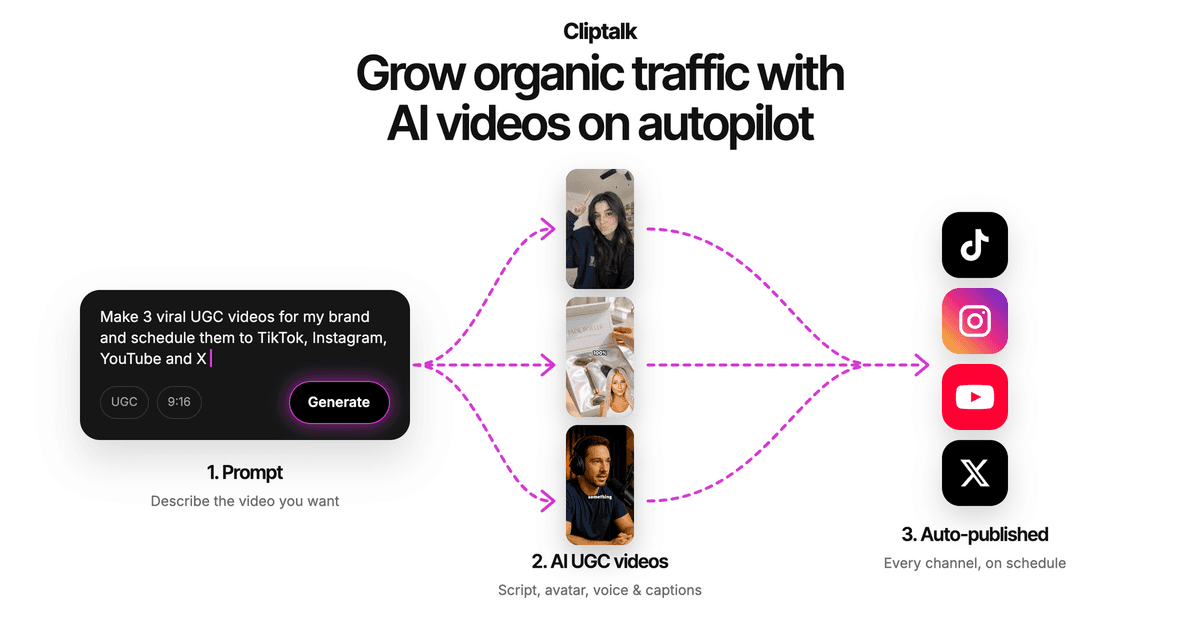
The in-app camera YouTube shipped in 2020 is still fine for filming yourself on the spot. Most of the Shorts I publish aren't shot on a phone, though. They start as a script, an idea, or an article I've already written. For that workflow, I use Cliptalk. It turns a text prompt or script into a fully edited vertical video, with captions, B-roll, and an AI voiceover already in place, so I'm not stitching clips together by hand.
Here's how the main creation options compare, based on what I've used:
| Option | Best for | What you still do yourself |
|---|---|---|
| Cliptalk | Turning scripts, prompts, or articles into finished Shorts, including faceless channels | Review the draft and tweak it in the editor |
| YouTube in-app camera | Quick, on-camera clips filmed on your phone | Film, trim, add music and text |
| YouTube Create | Free mobile editing of footage you already have | Source footage, edit the timeline, caption |
The reason I lean on an AI generator is practical. Captions are the biggest retention lever on Shorts because so many people start watching muted, and generating them by hand for every video eats time. Voice cloning also lets me keep a consistent narrator across a series without recording every line. AI characters cover the cases where a story needs someone on screen but I don't want to be that person. If you run a channel without appearing on camera, I've written up what to look for in a YouTube Shorts maker for faceless channels.
A few habits that work regardless of the tool:
- Write the hook first. The first line decides whether someone keeps watching. Draft three versions and pick the sharpest.
- Default to under 60 seconds. Three-minute Shorts are allowed, but shorter videos are easier to finish and avoid the stricter copyright treatment.
- Use cleared audio. With claimed content blocking Shorts over one minute globally, stick to library music or audio you own.
- Batch your production. Write five scripts in one sitting, then generate and edit them together. Consistency beats occasional bursts.
- Center everything important. Between UI overlays and TV playback, edges are risky territory for text.
Frequently asked questions
When was YouTube Shorts released?
YouTube Shorts was released as a beta in India on September 14, 2020 (some sources say September 15). It came to the US in March 2021 and launched globally in more than 100 countries on July 13, 2021.
When did YouTube Shorts come out in the US?
Shorts reached the United States as a beta in March 2021. US users got the in-app Shorts camera, music, speed controls, timers, and a Shorts carousel on the homepage.
Why did YouTube launch Shorts in India first?
TikTok was banned in India on June 29, 2020, leaving a huge short-form audience without its main app. YouTube launched the Shorts beta there about eleven weeks later, which gave it a large test market at exactly the right moment.
When did YouTube Shorts leave beta?
Shorts officially exited beta on February 20, 2022.
How long could the first YouTube Shorts be?
Early in-app Shorts were limited to 15 seconds. The format later settled on a 60-second maximum. Since October 15, 2024, square or vertical uploads up to three minutes count as Shorts.
Did old videos become Shorts after the three-minute change?
No. Vertical videos between one and three minutes uploaded before October 15, 2024 stayed long-form. Only uploads on or after that date are classified as Shorts. For Official Artist Channels, the cutoff is December 8, 2025.
Was YouTube Shorts created to compete with TikTok?
Yes. YouTube's goal when it began working on Shorts in 2019 was to compete with TikTok, and the India launch came directly after TikTok's ban there.
How big is YouTube Shorts now?
By February 2024, Shorts averaged 70 billion daily views, up from the 3.5 billion daily views YouTube reported in early 2021. The number of channels uploading Shorts was growing 50% year over year at that point.
Tags: youtube shorts, short-form video, shorts history, video creation, content creators